
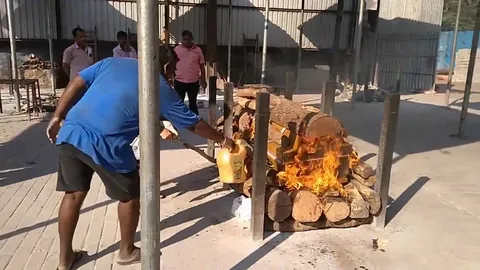
Traditional wood cremation is one of the oldest and most widely followed funeral practices in India, deeply rooted in Hindu customs and spiritual beliefs. The ritual signifies the return of the physical body to the five elements earth, water, fire, air, and space while the soul continues its onward journey.
Understanding the Significance of Wood Cremation
Wood cremation involves placing the deceased on a funeral pyre made of natural wood and performing sacred rites before and during the cremation. This method is considered spiritually purifying and aligns with ancient scriptures.
In cities like Wood Cremation in banglore and Wood Cremation in pune, many crematoriums still offer traditional open-pyre facilities alongside modern electric options, allowing families to follow age-old customs.
Step 1: Preparation of the Body
The process begins with preparing the body at home or in a hospital:
- The body is bathed and cleaned.
- It is dressed in simple, traditional clothing (usually white).
- Flowers and garlands are placed as a mark of respect.
- The body is laid on a stretcher or bier for the final journey.
Step 2: Arranging the Funeral Pyre
At the cremation ground:
- A pyre is constructed using logs of wood, often mango or sandalwood.
- The body is placed on the pyre with care and respect.
- Additional wood is placed over the body to ensure complete cremation.
In urban setups offering Wood Cremation in banglore and Wood Cremation in pune, staff usually assist in arranging the pyre properly.
Step 3: Performing Last Rites (Antim Sanskar)
Family members gather to perform religious rituals:
- A priest may chant Vedic mantras.
- The eldest son or a close male relative traditionally leads the rites (though this is evolving today).
- Rituals like “kapal kriya” (breaking of the skull) are performed as per tradition.
Step 4: Lighting the Pyre
- The chief mourner circles the pyre, usually three times, in a counter-clockwise direction.
- The pyre is then lit using a sacred flame.
- This act symbolizes releasing the soul from the physical body.
Step 5: Cremation Process
- The body gradually turns to ashes over several hours.
- Family members may stay until the fire subsides or leave after the initial rituals, depending on customs.
Step 6: Collection of Ashes (Asthi Visarjan)
- After the cremation, ashes are collected, usually the next day.
- These ashes are then immersed in a holy river, such as the Ganges, as part of the final rites.
Cultural Importance Across Cities
Even in metropolitan areas, traditional cremation continues to hold emotional and spiritual value. Facilities providing Wood Cremation in banglore and Wood Cremation in pune ensure that families can perform rituals authentically while receiving logistical support.
Final Thoughts
Wood cremation rituals in India are more than just a farewell they are a sacred journey that honors the life of the departed and provides closure to loved ones. Understanding each step helps families perform the rites with respect, clarity, and peace during a difficult time.