
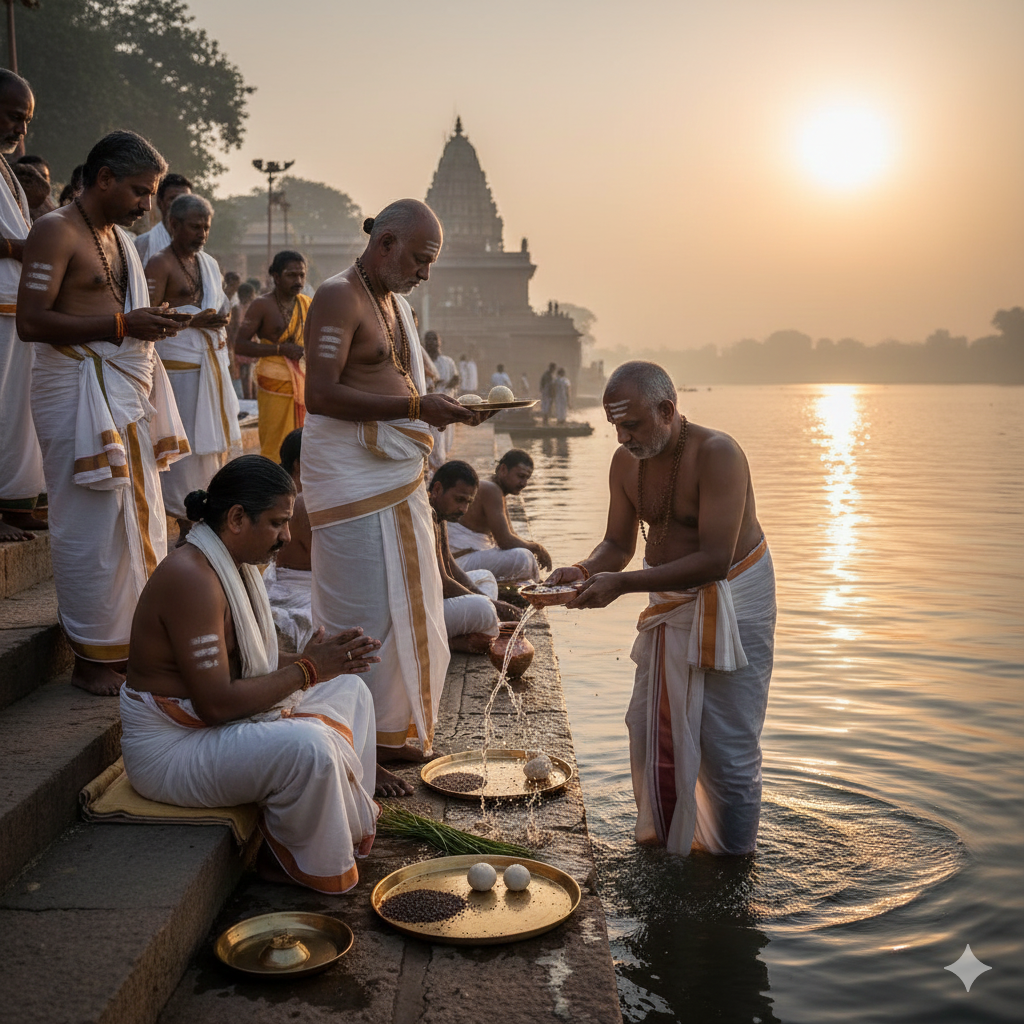
In Telugu Brahmin tradition, death views not as an end but, it would replicate the transition of the soul from the physical body. Of course, the rituals are happening to the performing to the death to consider rooted in Vedic scripts. It is meant for peace of mind for departed soul to offer emotional and spiritual support. The Telugu Brahmin rituals after death emphasize the purity, discipline, and the continuity of dharma to get across generations.
Antyeshti: The Last Rites
On the other hand, the first and foremost choice is crucial for noticing about Antyeshti. It is popularly known as body baths, dress in simple clothes and place facing south. The direction is very important and notices it based on the Yama the god of death. The eldest son or a male heir performs the rites under the guidance of a priest. Of course, cremation mainly prefers based on the released of the soul from the earthly body. The performer lights the funeral pyre, and signify the detachment and acceptance of cycle of life and death as well. So, performance of pyres and rituals would be differing as per the traditional concept.
Ash Collection and Asthi Visarjan
Once cremation is over, the ashes can collect and usually happen on the third day. These ashes immerse in a sacred river. The Telugu Brahmin funeral rites have to perform based on the believe on the god and soul return. The deceased person in the family may attain moksha libration. It is also marking as the gradual withdrawal of family from mourning and the beginning of the spiritual healing as well.
Preta Karma and the First Ten Days
At the period, following death, it believes as a time when the soul exists in an intermediate state. It is nothing but preta. During the first ten days, preta karma rituals perform daily. It is offering of water, rice balls, and prayers chanting to make nourish and guide the soul as well. The family observes the austerity, avoids celebrations, and follows strict dietary rules. It is a sign of respect and purification.
Ekoddishta and Sapindikarana
On the eleventh day, Ekoddishta ceremony has to perform based on the pindam to the departed soul. It is especially followed Sapindikarana on the 13th day. The soul is symbolized with an ancestral spirits. The rituals have signified with soul acceptance into lineage of ancestors and crucial for harmony and blessings as well. So, it should be necessary one to perform with priest guidance and cremation service provider.
Shraddha and Annual Remembrance
After the completion of initial rites, Shraddha ceremonies are mainly capable for annual during pitru paksha. The rituals have to carry out by offering foods, water, and prayers to ancestors. It is meant for seeking blessings for prosperity and well being. In Telugu Brahmin households, Shraddha is mainly capable for sacred duty and reinforces family values and respect for lineage.
Significance of the Rituals
Every post-mortem ceremony has deep spiritual significance. They enable the family to grieve via organized rituals while assisting the soul in its calm journey toward emancipation. For Telugu Brahmins, these rituals preserve cosmic equilibrium, preserve the unbroken connection between the living and their ancestors, and protect Vedic traditions.